人
 | ||||||||
| ||||||||
Translingual
| Stroke order | |||
|---|---|---|---|
 | |||
| Stroke order | |||
|---|---|---|---|
 | |||
Han character
人 (Kangxi radical 9, 人+0, 2 strokes, cangjie input 人 (O), four-corner 80000, composition ⿸丿㇏)
- Kangxi radical #9, ⼈.
Derived characters
References
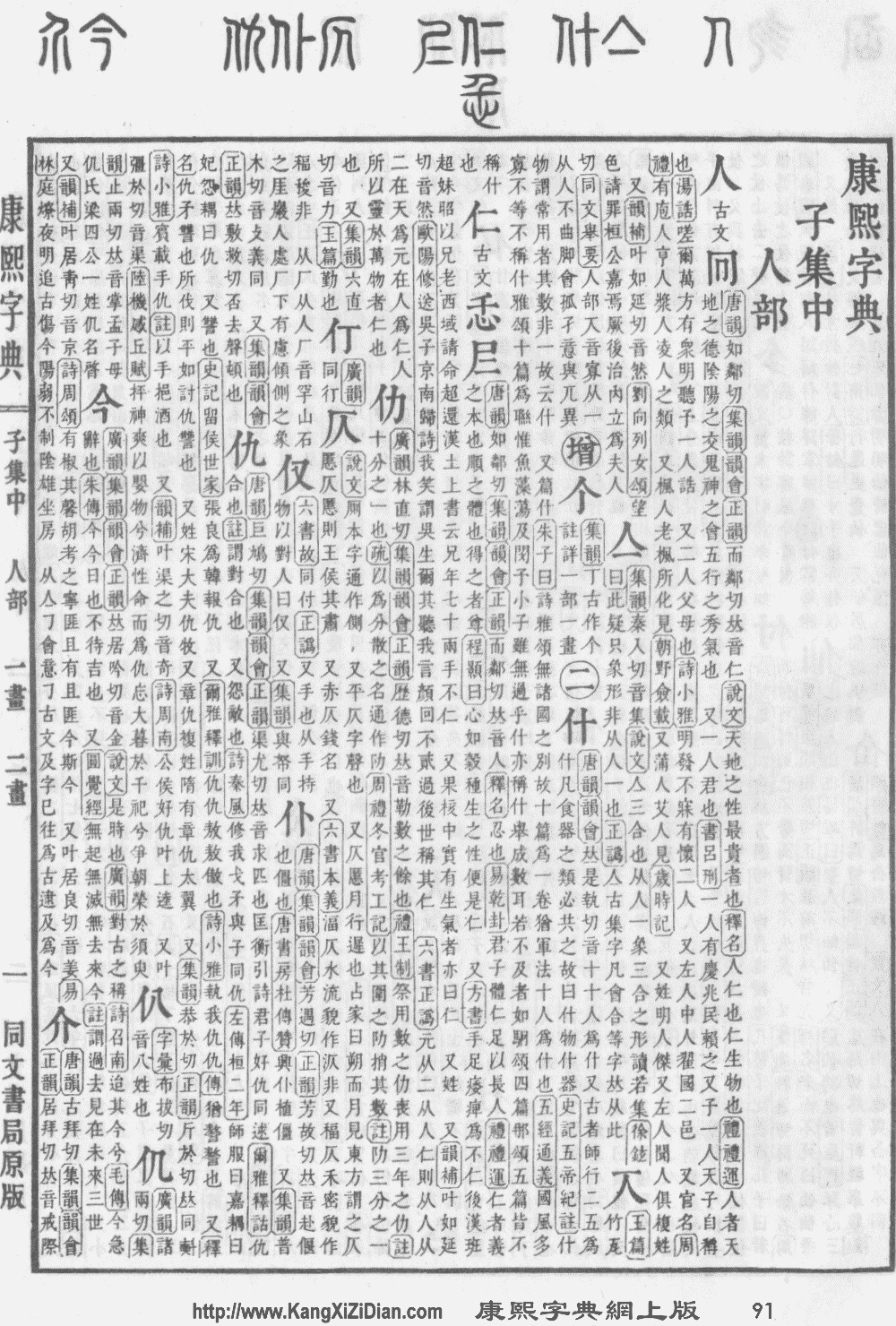
- KangXi: page 91, character 1
- Dai Kanwa Jiten: character 344
- Dae Jaweon: page 190, character 1
- Hanyu Da Zidian (first edition): volume 1, page 101, character 10
- Unihan data for U+4EBA
Chinese
Glyph origin
| Historical forms of the character 人 | |||||||||||||||||||||||||||||||||||||||||||||||||||||||||||||||||||||||||||||||||||||||||||||||||||||||||||||||||||||||||||||||||||||||||||||||||||||||||||||||||||||||||||||||||||||||||||||||||||||||||||||||||
|---|---|---|---|---|---|---|---|---|---|---|---|---|---|---|---|---|---|---|---|---|---|---|---|---|---|---|---|---|---|---|---|---|---|---|---|---|---|---|---|---|---|---|---|---|---|---|---|---|---|---|---|---|---|---|---|---|---|---|---|---|---|---|---|---|---|---|---|---|---|---|---|---|---|---|---|---|---|---|---|---|---|---|---|---|---|---|---|---|---|---|---|---|---|---|---|---|---|---|---|---|---|---|---|---|---|---|---|---|---|---|---|---|---|---|---|---|---|---|---|---|---|---|---|---|---|---|---|---|---|---|---|---|---|---|---|---|---|---|---|---|---|---|---|---|---|---|---|---|---|---|---|---|---|---|---|---|---|---|---|---|---|---|---|---|---|---|---|---|---|---|---|---|---|---|---|---|---|---|---|---|---|---|---|---|---|---|---|---|---|---|---|---|---|---|---|---|---|---|---|---|---|---|---|---|---|---|---|---|---|
| Shang | Western Zhou | Spring and Autumn | Warring States | Shuowen Jiezi (compiled in Han) | Hanjian (compiled in Song) | Guwen Sishengyun (compiled in Song) | Jizhuan Guwen Yunhai (compiled in Song) | Liushutong (compiled in Ming) | Libian (compiled in Qing) | Tang Stone Classics | Kangxi Dictionary (compiled in Qing) | ||||||||||||||||||||||||||||||||||||||||||||||||||||||||||||||||||||||||||||||||||||||||||||||||||||||||||||||||||||||||||||||||||||||||||||||||||||||||||||||||||||||||||||||||||||||||||||||||||||||
| Bronze inscriptions | Oracle bone script | Bronze inscriptions | Oracle bone script | Bronze inscriptions | Bronze inscriptions | Chu slip and silk script | Qin slip script | Odd character | Small seal script | Transcribed ancient scripts | Transcribed ancient scripts | Transcribed ancient scripts | Transcribed ancient scripts | Clerical script | Regular script | Ming typeface | |||||||||||||||||||||||||||||||||||||||||||||||||||||||||||||||||||||||||||||||||||||||||||||||||||||||||||||||||||||||||||||||||||||||||||||||||||||||||||||||||||||||||||||||||||||||||||||||||
 |
 |
 |
 |
 |
 |
 |
 |
 |
 |
 |
 |
 |
 |
 |
 |
 | |||||||||||||||||||||||||||||||||||||||||||||||||||||||||||||||||||||||||||||||||||||||||||||||||||||||||||||||||||||||||||||||||||||||||||||||||||||||||||||||||||||||||||||||||||||||||||||||||
||||||||||||||||
|
References: Mostly from Richard Sears' Chinese Etymology site (authorisation),
| |||||||||||||||||||||||||||||||||||||||||||||||||||||||||||||||||||||||||||||||||||||||||||||||||||||||||||||||||||||||||||||||||||||||||||||||||||||||||||||||||||||||||||||||||||||||||||||||||||||||||||||||||


Pictogram (象形) – side view of a standing man, highlighting the arms and legs. Compare 大.
Etymology 1
| simp. and trad. |
人 | |
|---|---|---|
| alternative forms | ||
Sagart (1999) relates it to Tibetan ཉེན (nyen, “relative”), from ཉེ (nye, “near”) + nominalizing suffix -n; if so, from Proto-Sino-Tibetan *s-naːj ~ s-nej (“near”).
Schuessler (2007) proposes two etymologies:
- Same etymon as 仁 (OC *njin, “to be kind; to be good”), from Proto-Sino-Tibetan *s/k-niŋ (“heart; brain; mind”). The semantic association of 仁 with 人 was somewhat late, dated to Mencius's time; later on, 仁 would be usually interpreted as "humane, acting like a human being".
- Related to Proto-Mon-Khmer *ɲaʔ ~ *ɲah (“person”) with a nominalizing suffix -n, from the auto-ethnonym of a hostile, possibly Austroasiatic-speaking, eastern people, whom the Sinitic-speaking Shang referred to as 人方 (OC *njin paŋ).
Pronunciation
Definitions
人
- man; person; people (Classifier: 個/个 m c; 隻/只 h)
- 人類/人类 ― rénlèi ― humans
- 那人是誰?/那人是谁? ― Nà rén shì shéi? ― Who is that person?
- 有人敲門了。/有人敲门了。 ― Yǒurén qiāomén le. ― Someone knocked on the door.
- 無論過去抑如今 無論海水有外深 我的身邊總有天地人 [Taiwanese Hokkien, trad.]
- From: 2021, 袁小迪, 天地人
- bô-lūn kòe-khì ia̍h jû-kim, bô-lūn hái-chúi ū gōa chhim, góa ê sin-piⁿ chóng ū thian tē jîn [Pe̍h-ōe-jī]
- No matter in the past or the present, no matter how deep the ocean is, I always have the heavens, the earth, and people by my side.
无论过去抑如今 无论海水有外深 我的身边总有天地人 [Taiwanese Hokkien, simp.]
- a person associated with a particular identity or trait; -er
- body
- everybody; everyone
- 人手一冊/人手一册 ― rénshǒu yīcè ― It's a bestseller. (lit. Everyone has a copy.)
- 人所共知 ― rénsuǒgòngzhī ― common knowledge
- other people; others
- physical, psychological or moral quality or condition; character; personality (Classifier: 份 c; 個/个 c)
- manpower; worker; employee
- talent; person of talent
- (obsolete) common people; commoner
- 皇天上帝,后土神祇,眷顧降命,屬秀黎元,為人父母,秀不敢當。 [Literary Chinese, trad.]
- From: The Book of the Later Han, circa 5th century CE
- Huángtiān shàngdì, hòutǔ shénqí, juàngù jiàngmìng, shǔ Xiù líyuán, wéi rén fùmǔ, Xiù bùgǎn dāng. [Pinyin]
- (please add an English translation of this example)
皇天上帝,后土神祇,眷顾降命,属秀黎元,为人父母,秀不敢当。 [Literary Chinese, simp.]
- adult; grown-up
- (obsolete) sexual intercourse
- (obsolete) company; companion; friend
- artificial; man-made
- (obsolete) human affairs; ways of the world
- (obsolete) mortal world; earthly word
- (obsolete) Alternative form of 仁 (rén, “kernel”)
- (obsolete) Alternative form of 仁 (rén, “charity”)
- (obsolete) Alternative form of 仁 (rén, “loving; kind”)
- (Beijing) Lenition of 人家 (rénjia).
- (Taishanese) paternal grandmother
- A surname
Synonyms
Compounds
|
|
|
Etymology 2
| simp. and trad. |
人 | |
|---|---|---|
| alternative forms | 儂/侬 𠆧 | |
The Min native word for “person”; used as a replacement character for 儂. Use of 人 is recommended by Taiwan's Ministry of Education.
Pronunciation 1
Definitions
人 (Coastal Min)
Pronunciation 2
Definitions
人 (Coastal Min)
References
- “人”, in 漢語多功能字庫 (Multi-function Chinese Character Database), 香港中文大學 (the Chinese University of Hong Kong), 2014–
- Dictionary of Chinese Character Variants (教育部異體字字典), A00068
- “Entry #52”, in 臺灣閩南語常用詞辭典 [Dictionary of Frequently-Used Taiwan Minnan] (in Chinese and Min Nan), Ministry of Education, R.O.C., 2011.
Japanese
Readings
Etymology 1
| Kanji in this term |
|---|
| 人 |
| ひと Grade: 1 |
| kun’yomi |
⟨pi1to2⟩ → */pʲitə/ → /fito/ → /hito/ → /çito/
From Old Japanese, from Proto-Japonic *pitə.
Noun
人 • (hito) (counter 人)
- a person, human
- an individual
- Synonym: 個人 (kojin)
- mankind, people
- character, personality
- an average person
- Synonym: 世人 (sejin, yohito)
- This term needs a translation to English. Please help out and add a translation, then remove the text
{{rfdef}}. - (law) This term needs a translation to English. Please help out and add a translation, then remove the text
{{rfdef}}. - This term needs a translation to English. Please help out and add a translation, then remove the text
{{rfdef}}. - an adult
- someone (else)
Usage notes
- When scientifically referring to humans, this term is often spelled in katakana, as ヒト.
- From Old Japanese or Middle Japanese development, hito is sometimes shifted to -uto, -udo, -to, -tto, or -do.
Derived terms
- 人人 (hitobito), 人々 (hitobito, “people”)
- 人垣 (hitogaki)
- 人影 (hitokage, “figure or shadow of a person”)
- 人柄 (hitogara)
- 人気 (hitoke)
- 人心 (hitogokoro)
- 人質 (hitojichi)
- 人魂 (hitodama)
- 人伝 (hitozute)
- 人手 (hitode)
- 人出 (hitode)
- 為人 (hitotonari)
- 人並 (hitonami), 人並み (hitonami)
- 人波 (hitonami)
- 人の世 (hito no yo): this world, the world of humans (as opposed to the world of the gods)
- 人前 (hitomae)
- 人身 (hitomi)
- 商人 (akyūdo), 商人 (akindo, “trader, shopkeeper, merchant”)
- 弟 (otōto, “younger brother”)
- 首 (obito): a chief or boss; a clan in ancient Japan
- 狩人 (karyūdo), 猟人 (karyūdo)
- 玄人 (kurōto, “expert, professional”)
- 蔵人 (kurōdo)
- 恋人 (koibito)
- 妹 (imōto, “younger sister”)
- 舅 (shūto, “father-in-law”)
- 姑 (shūto, “mother-in-law”)
- 素人 (shirōto, “amateur, novice”)
- 旅人 (tabibito)
- 官人 (tsukasabito)
- 仲人 (nakōdo, “go-between, matchmaker”)
- 隼人 (hayahito), 隼人 (hayato)
- 真人 (mahito), 真人 (matōdo), 真人 (mōto): a clan in ancient Japan; a noble; someone who is very honest and straightforward
- 客人 (marōdo, “visitor, guest”)
- 召人 (meshūdo)
- 囚人 (meshūdo, “prisoner”)
- 寄人 (yoribito), 寄人 (yoryūdo)
- 若人 (wakōdo)
Etymology 2
| Kanji in this term |
|---|
| 人 |
| にん Grade: 1 |
| goon |
Go-on borrowing from Early Middle Chinese 人 (MC ȵiɪn). Compare Shanghainese nyin.
Derived terms
Etymology 3
| Kanji in this term |
|---|
| 人 |
| じん Grade: 1 |
| kan’on |
Kan-on borrowing from Late Middle Chinese 人 (MC ȵiɪn). Compare Mandarin /ʐən/.
Pronunciation
- IPA(key): [d͡ʑĩɴ]
Suffix
人 • (-jin)
Usage notes
When compounding, makes the accent fall on the 自立拍 (jiritsuhaku, “autonomous mora”) immediately before itself. For example:
- 中国 (ちゅꜜうごく) + 人 → 中国人 (ちゅうごくꜜじん)
- アメリカ + 人 → アメリカ人 (アメリカꜜじん)
- 朝鮮 (ちょうせꜜん) + 人 → 朝鮮人 (ちょうせꜜんじん; ん is a 特殊拍 (tokushuhaku, “special mora”), therefore accentless)
- スペꜜイン + 人 → スペイン人 (スペイꜜンじん; ン is a 特殊拍 (tokushuhaku, “special mora”), therefore accentless)
- ノルウェꜜー + 人 → ノルウェー人 (ノルウェꜜーじん; ー is a 特殊拍 (tokushuhaku, “special mora”), therefore accentless)
There is one notable exception:
Derived terms
- 人影 (jin'ei)
- 人為 (jin'i)
- 人格 (jinkaku)
- 人間 (jinkan)
- 人語 (jingo)
- 人後 (jingo)
- 人権 (jinken)
- 人口 (jinkō)
- 人工 (jinkō)
- 人孔 (jinkō, “manhole”)
- 人行 (jinkō)
- 人材 (jinzai)
- 人事 (jinji)
- 人種 (jinshu)
- 人心 (jinshin)
- 人身 (jinshin)
- 人生 (jinsei)
- 人選 (jinsen)
- 人体 (jintai)
- 人道 (jindō)
- 人徳 (jintoku)
- 人物 (jinbutsu)
- 人望 (jinbō)
- 人名 (jinmei)
- 人命 (jinmei)
- 人類 (jinrui)
- 人和 (jinwa)
- 偉人 (ijin)
- 異人 (ijin)
- 歌人 (kajin)
- 家人 (kajin)
- 佳人 (kajin)
- 華人 (kajin)
- 外人 (gaijin)
- 官人 (kanjin)
- 漢人 (kanjin)
- 客人 (kyakujin)
- 求人 (kyūjin)
- 旧人 (kyūjin)
- 狂人 (kyōjin)
- 軍人 (gunjin, “serviceman, member of the military”)
- 吾人 (gojin)
- 後人 (kōjin)
- 公人 (kōjin)
- 工人 (kōjin)
- 詩人 (shijin)
- 私人 (shijin)
- 新人 (shinjin)
- 成人 (seijin)
- 聖人 (seijin)
- 星人 (seijin)
- 前人 (zenjin)
- 達人 (tatsujin)
- 旅人 (ryojin)
- 党人 (tōjin)
- 唐人 (tōjin)
- 俳人 (haijin)
- 廃人 (haijin)
- 閑人 (himajin), 暇人 (himajin, “man of leisure”)
- 無人 (bujin), 無人 (mujin)
- 魔人 (majin)
- 老人 (rōjin)
- 外国人 (gaikokujin, “foreigner”)
Etymology 4
| Kanji in this term |
|---|
| 人 |
| Grade: 1 |
| irregular |
From Old Japanese. The proto-form may have been -ri or -tari, see 二人 (futari, literally “two people”).
Korean
Etymology
From Middle Chinese 人 (MC ȵiɪn).
| Historical Readings | ||
|---|---|---|
| Dongguk Jeongun Reading | ||
| Dongguk Jeongun, 1448 | ᅀᅵᆫ (Yale: zìn) | |
| Middle Korean | ||
| Text | Eumhun | |
| Gloss (hun) | Reading | |
| Hunmong Jahoe, 1527 | 사〯ᄅᆞᆷ (Yale: sǎlòm) | ᅀᅵᆫ (Yale: zìn) |
Pronunciation
- (SK Standard/Seoul) IPA(key): [in]
- Phonetic hangul: [인]
Compounds
- 인간 (人間, in'gan)
- 인격 (人格, in'gyeok)
- 인공 (人工, in'gong)
- 인구 (人口, in'gu)
- 인기 (人氣, in'gi)
- 인도 (人道, indo)
- 인력 (人力, illyeok)
- 인류 (人類, illyu)
- 인망 (人望, inmang)
- 인명 (人名, inmyeong)
- 인문 (人文, inmun)
- 인물 (人物, inmul)
- 인민 (人民, inmin)
- 인분 (人分, inbun)
- 인사 (人事, insa)
- 인사 (人士, insa)
- 인삼 (人蔘, insam, “ginseng”)
- 인상 (人相, insang)
- 인생 (人生, insaeng)
- 인성 (人性, inseong)
- 인어 (人魚, ineo)
- 인원 (人員, inwon)
- 인재 (人材, injae)
- 인정 (人情, injeong)
- 인종 (人種, injong)
- 인체 (人體, inche)
- 인형 (人形, inhyeong)
- 인화 (人和, inhwa)
- 가인 (佳人, gain)
- 가인 (家人, gain)
- 개인 (個人, gaein)
- 거인 (巨人, geoin)
- 걸인 (乞人, georin)
- 고인 (古人, goin)
- 고인 (故人, goin)
- 광인 (狂人, gwang'in)
- 교인 (敎人, gyoin)
- 군인 (軍人, gunin)
- 궁인 (宮人, gung'in)
- 귀인 (貴人, gwiin)
- 나인 (內人, nain)
- 낭인/랑인 (浪人, nang'in/rang'in)
- 노인/로인 (老人, noin/roin)
- 달인 (達人, darin)
- 당인 (黨人, dang'in)
- 대인 (大人, daein)
- 명인 (名人, myeong'in)
- 무인 (武人, mu'in)
- 미인 (美人, miin)
- 백인 (白人, baegin)
- 범인 (犯人, beomin)
- 법인 (法人, beobin)
- 본인 (本人, bonin)
- 부인 (夫人, bu'in)
- 부인 (婦人, bu'in)
- 살인 (殺人, sarin)
- 상인 (商人, sang'in)
- 설인 (雪人, seorin)
- 성인 (成人, seong'in)
- 성인 (聖人, seong'in)
- 속인 (俗人, sogin)
- 시인 (詩人, siin)
- 신인 (新人, sinin)
- 악인 (惡人, agin)
- 애인 (愛人, aein)
- 야인 (野人, yain)
- 양인/량인 (良人, yang'in/ryang'in)
- 여인 (女人, yeoin)
- 연인/련인 (戀人, yeonin/ryeonin)
- 왜인 (倭人, waein)
- 외인 (外人, oein)
- 우인 (偶人, u'in)
- 우인 (愚人, u'in)
- 위인 (偉人, wiin)
- 은인 (恩人, eunin)
- 의인 (義人, uiin)
- 이인 (異人, iin)
- 장인 (丈人, jang'in)
- 죄인 (罪人, joein)
- 주인 (主人, ju'in)
- 증인 (證人, jeung'in)
- 철인 (哲人, cheorin)
- 철인 (鐵人, cheorin)
- 초인 (超人, choin)
- 토인 (土人, toin)
- 폐인 (廢人, pyein)
- 현인 (賢人, hyeonin)
- 흑인 (黑人, heugin)
- 인격화 (人格化, in'gyeokhwa)
- 인력거 (人力車, illyeokgeo)
- 인류학 (人類學, illyuhak)
- 인민폐 (人民幣, inminpye)
- 인삼차 (人蔘茶, insamcha)
- 인형극 (人形劇, inhyeonggeuk)
- 노인학/로인학 (老人學, noinhak/roinhak)
- 살인자 (殺人者, sarinja)
- 선인장 (仙人掌, seoninjang)
- 유인원 (類人猿, yuinwon)
- 주인공 (主人公, ju'in'gong)
- 고소인 (告訴人, gosoin)
- 관리인 (管理人, gwalliin)
- 기업인 (企業人, gieobin)
- 대리인 (代理人, daeriin)
- 미망인 (未亡人, mimang'in)
- 보증인 (保證人, bojeung'in)
- 서양인 (西洋人, seoyang'in)
- 야만인 (野蠻人, yamanin)
- 언론인 (言論人, eollonin)
- 연예인 (演藝人, yeonyein)
- 외계인 (外界人, oegyein)
- 외국인 (外國人, oegugin)
- 우주인 (宇宙人, uju'in)
- 유태인 (猶太人, yutaein)
- 일반인 (一般人, ilbanin)
- 일본인 (日本人, ilbonin)
- 장애인 (障礙人/障碍人, jang'aein)
- 정치인 (政治人, jeongchiin)
- 조선인 (朝鮮人, joseonin)
- 죽부인 (竹夫人, jukbu'in)
- 중국인 (中國人, junggugin)
- 중재인 (仲裁人, jungjaein)
- 지구인 (地球人, jigu'in)
- 지배인 (支配人, jibaein)
- 지식인 (知識人, jisigin)
- 한국인 (韓國人, han'gugin)
- 현대인 (現代人, hyeondaein)
- 후견인 (後見人, hugyeonin)
- 인면수심 (人面獸心, inmyeonsusim)
- 인본주의 (人本主義, inbonjuui)
- 인산인해 (人山人海, insaninhae)
- 인신공격 (人身攻擊, insin'gonggyeok)
- 민주당원 (民主黨人, minjudang'won)
Kunigami
Pronunciation
- IPA(key): /t͡ɕuː/
Miyako
Pronunciation
- IPA(key): /ps̩tu/
Okinawan
Compounds
- 人間 (ninjin)
Etymology 1
| Kanji in this term |
|---|
| 人 |
| っちゅ Grade: 1 |
| kun’yomi |
Pronunciation
- IPA(key): /t̚t͡ɕu/
Derived terms
Etymology 2
| Kanji in this term |
|---|
| 人 |
| ぴとぅ Grade: 1 |
| kun’yomi |
Derived terms
- 八重山人 (yēyamapitu): Yaeyamans, Yaeyama people
Etymology 3
| Kanji in this term |
|---|
| 人 |
| にん Grade: 1 |
| on’yomi |
Derived terms
- 官人 (kwannin): public servant, civil servant, government official
Derived terms
Etymology 4
| Kanji in this term |
|---|
| 人 |
| たい Grade: 1 |
| kun’yomi |
Derived terms
- 一人 (chui), 独い (chui, “alone, lone; one person”)
Etymology 5
| Kanji in this term |
|---|
| 人 |
| い Grade: 1 |
| kun’yomi |
Vietnamese
| Hán tự in this term |
|---|
| 人 |
Han character
人: Hán Việt readings: nhân (
人: Nôm readings: nhơn[1][2][3][4], nhân[1][4], người[1]
- (Northern Vietnam) chữ Hán form of nhân (“human”).
- (Southern Vietnam) chữ Hán form of nhơn (“human”).
References
- Nguyễn et al. (2009).
- Trần (2004).
- Bonet (1899).
- Génibrel (1898).
Yaeyama
Pronunciation
- IPA(key): /pɨtu/
Yonaguni
Pronunciation
- IPA(key): /tˀu/